From Discussions to Decisions.
Important decisions should be clear, written, owned, and defensible. CLEAR gives teams a structured way to move complex decisions through real limits, viable paths, clear ownership, and into action.
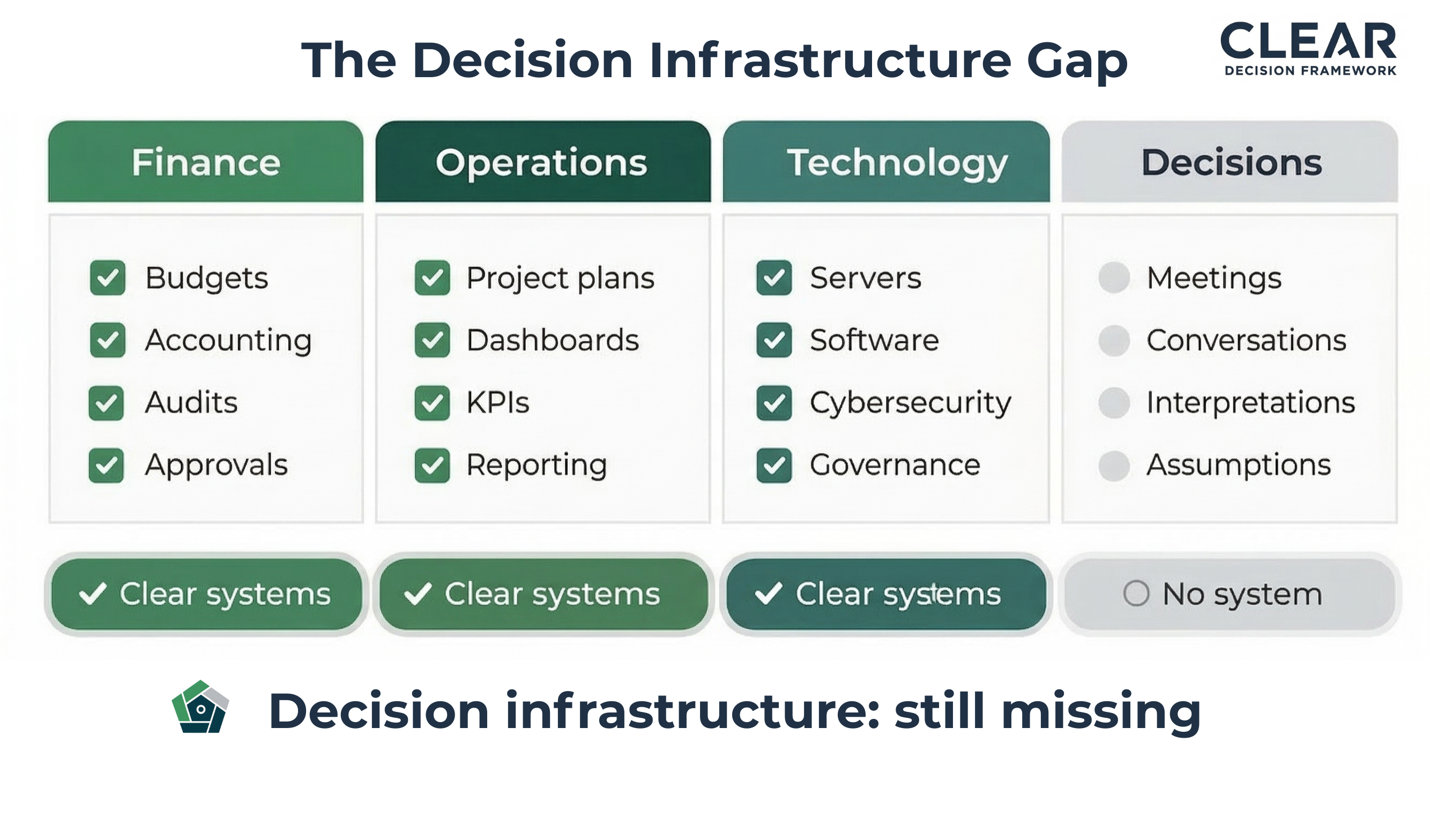
Most organizations have systems for everything except decisions.
Finance has budgets, accounting, audits, and approvals. Operations has plans, dashboards, KPIs, and reporting. Technology has systems and governance.
Important decisions are still often left to meetings, conversations, interpretations, and assumptions.
CLEAR provides the missing structure.
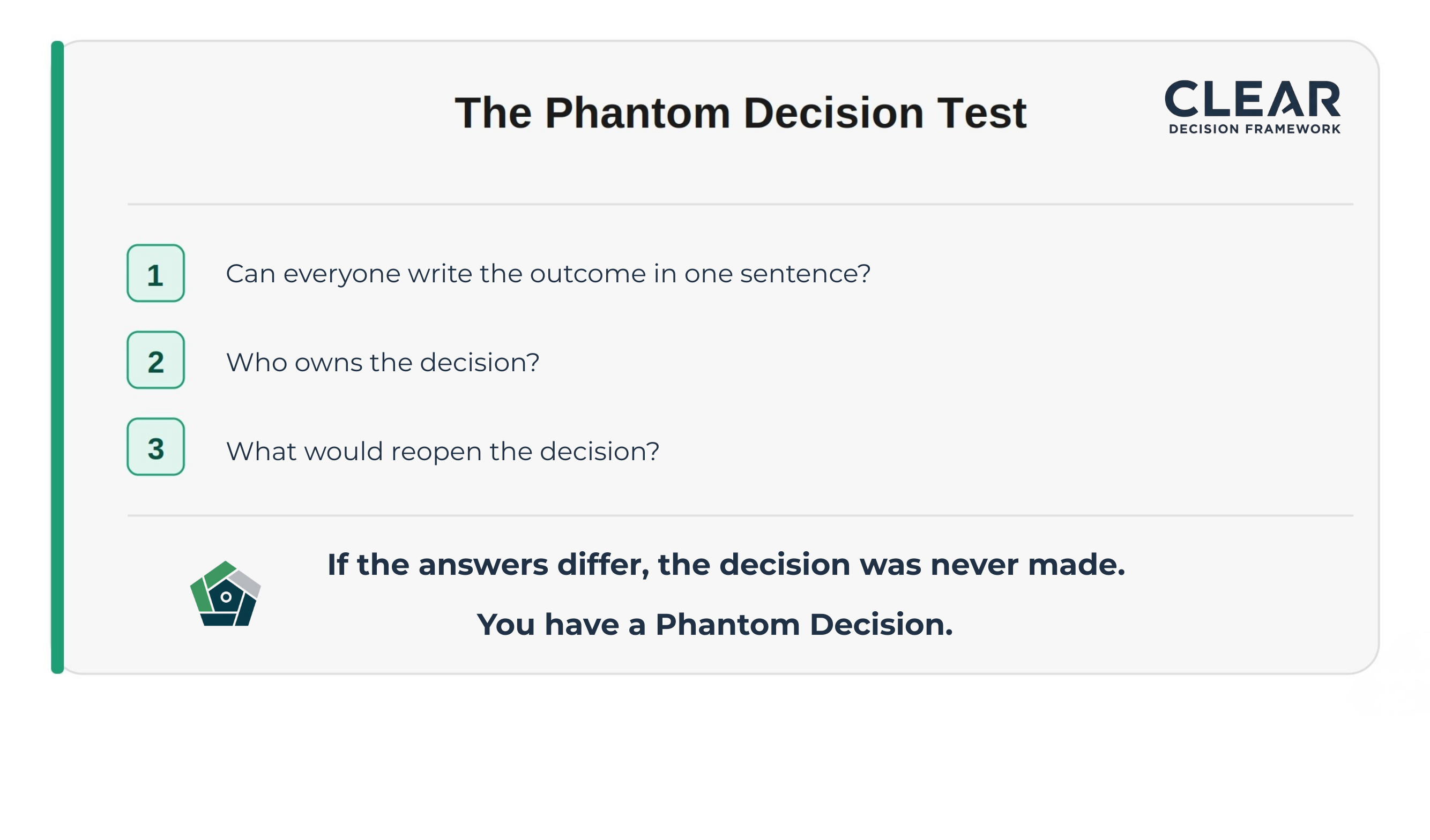
A Phantom Decision happens when a meeting feels settled but no durable decision was actually created. People leave with different understandings, teams act in different directions, and the question eventually comes back.
The cost appears later.
Reopened decisions create lost time, rework, frustration, delay, and missed opportunities.
CLEAR moves the hard decision work forward, while the facts, people, and opportunity are still in the room.
Do you have a Phantom Decision?
Think of one important decision your team believes it already made. Check every statement that is true.
The three-question test
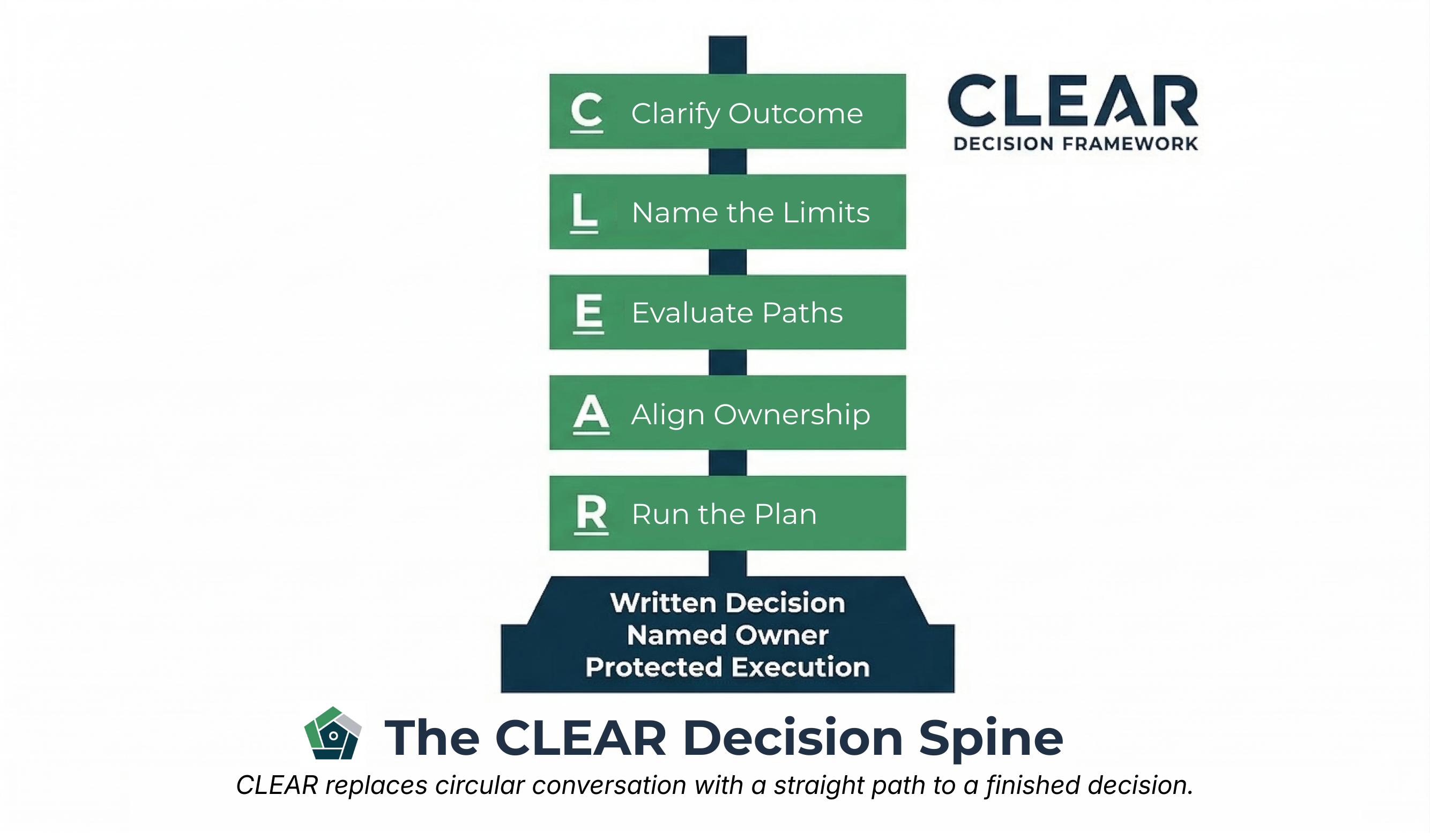
A straight path through a difficult decision.
CLEAR protects the sequence. Teams define the outcome before debating solutions, name the real limits, test realistic paths, assign ownership, and turn the decision into action.
Clarify the Outcome
Define what this decision actually needs to achieve before evaluating solutions.
Name the Limits
Surface the real constraints that shape what is possible.
Evaluate Paths
Test realistic options against the same outcome and limits.
Align Ownership
Name who owns the call, approvals, and next actions.
Run the Plan
Record the decision, actions, owners, dates, and review conditions.
The work doesn't end with a conversation.
Each CLEAR stage produces part of the written record. By the end, the organization can explain what it decided, why it decided it, who owns it, and what happens next.
Outcome Definition
The written result the decision must achieve.
Limits Reality Sheet
The real constraints that define what can work.
Path Evaluation Matrix
A consistent test of viable paths against reality.
Decision Ownership Record
The named owner, decision status, conditions, and approvals.
Decision Record
The final written record of what was decided and why.
Human-owned decisions. AI-assisted clarity.
CLEAR Decision Room applies the CLEAR Framework to real decisions while AI helps teams work through more information, evidence, and complexity without losing the structure of the process.
AI helps organize information and surface what the room may be missing. CLEAR protects the decision process. People remain responsible for the call.
AI helps manage complexity
Review supporting documents. Surface missing information. Identify assumptions and conflicting evidence. Track unresolved questions. Help test viable paths against the outcome and confirmed limits.
People retain authority
Qualified experts provide expert judgment. The CLEAR Guide protects the process. A named decision owner makes the final call and remains accountable for the outcome.
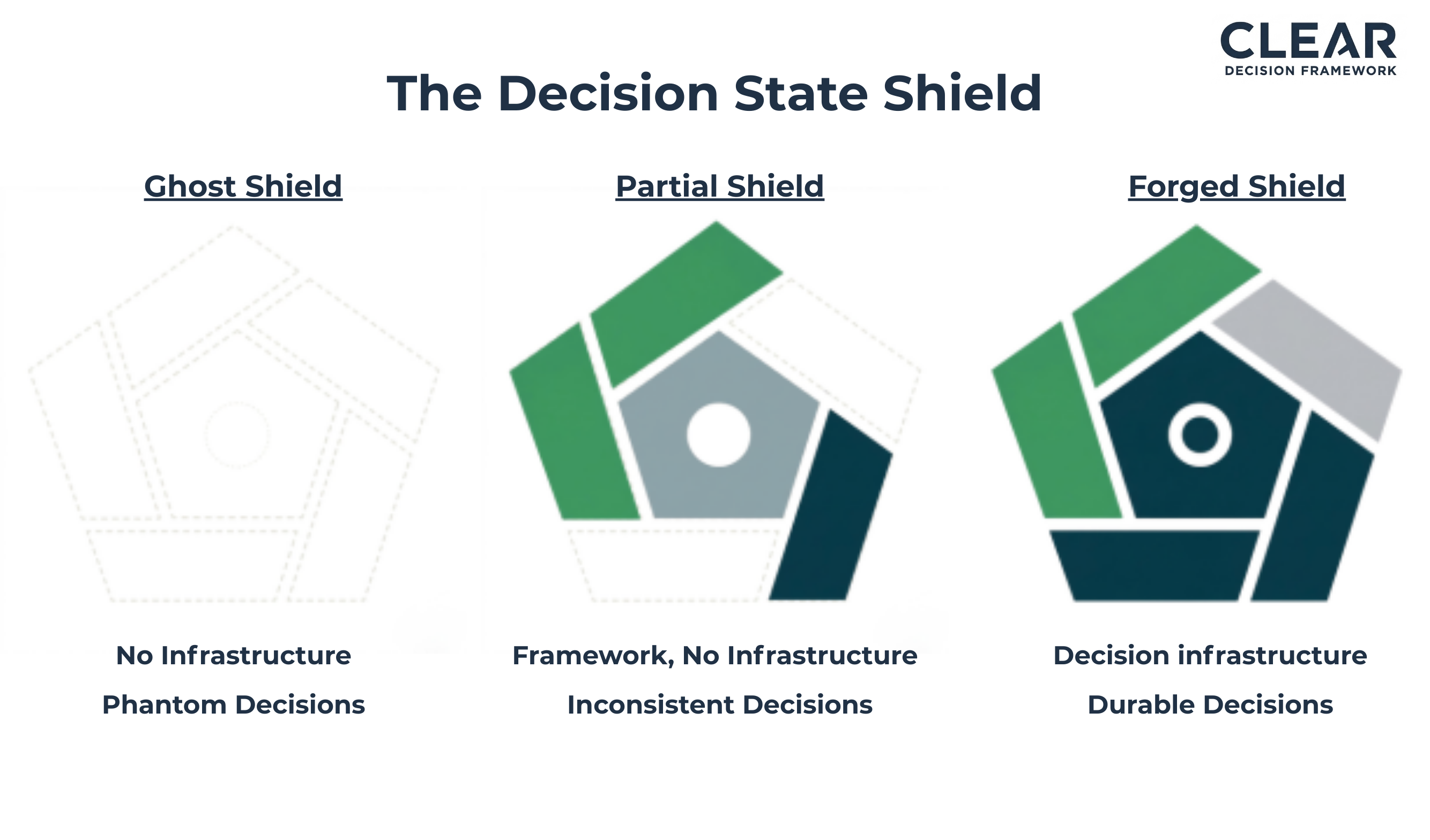
One decision framework. Many types of decisions.
The conversation changes. The decision structure remains.
We're starting with energy and microgrid decisions, where one choice can involve bids, interconnection studies, tariffs, contracts, mobility, resilience,and multiple stakeholders.
Energy & Infrastructure
CLEAR began in complex energy decisions where teams can spend months discussing technologies, costs, resilience, infrastructure, policy, mobility, risk, and stakeholder needs without reaching a decision everyone can explain and stand behind.
We are starting with microgrids, distributed energy, resilience, mobility, utility decisions, infrastructure investments, and other high-consequence energy decisions.
Cybersecurity
Decisions involving technical risk, operating impact, business continuity, authority, and response paths.
Financial & Insurance
Structured decisions where goals, limits, professional judgment, product options, and ownership must remain clear.
Organizations & Public Sector
Vendor choices, investments, partnerships, nonprofit decisions, public accountability, programs, and board-level decisions.
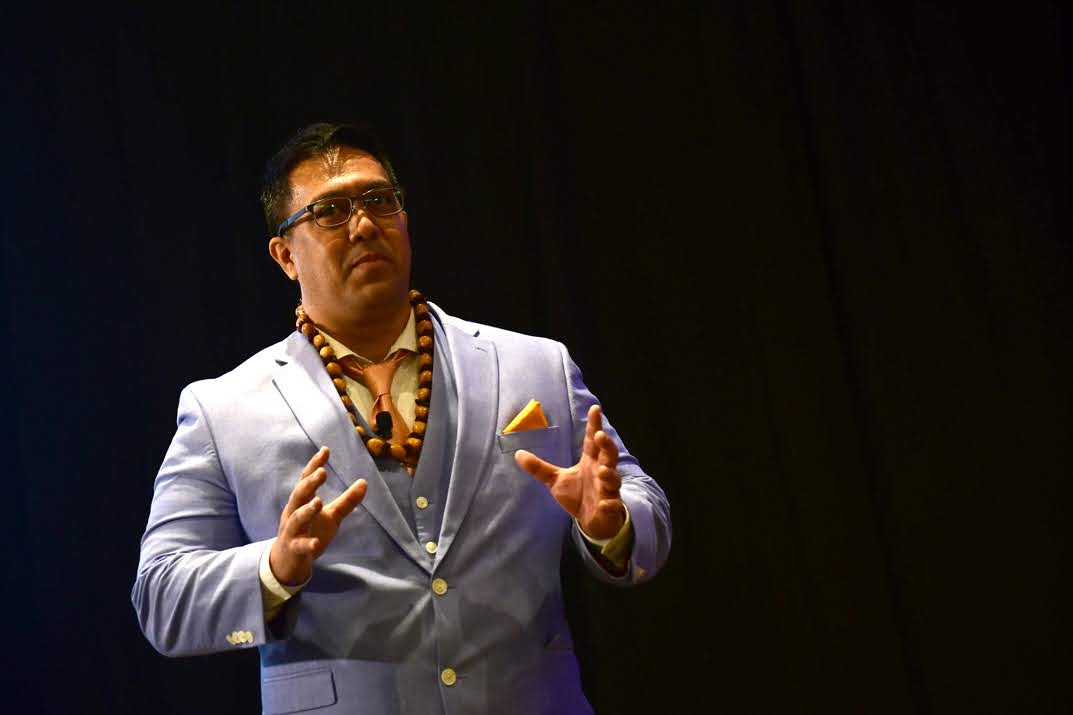
Built by AJ Perkins
I've spent years in rooms where the technology worked, the money was available, and the decision still didn't get made.
My work in microgrids, distributed energy, federal infrastructure, utilities, and emerging energy technologies kept exposing the same problem. The hardest part was often not the engineering. It was getting the right people to agree on the outcome, face the real limits, and put one name on the decision.
CLEAR is the process I built to solve that problem.
I'm not an engineer. CLEAR doesn't require the facilitator to be the technical expert. It requires someone who can protect the decision process and bring the right experts into it when needed.
The framework needs a standard.
The Institute exists to protect how CLEAR is taught, applied, documented, and improved as the system grows.
Standards
Protect the CLEAR sequence, language, artifacts, ethics, and quality of the decision process.
Practice
Train people to guide difficult decisions without pretending to be the technical or professional expert in the room.
Certification
Build a professional certification path for people who can apply CLEAR with discipline, written accountability, and clear boundaries.
If the decision matters, it should be able to survive the meeting.
CLEAR creates a written process that people can explain, own, act on, and review later.